From Accountant to Environmental Educator
Aravindh's Sea Change
Journey
Walking into a classroom full of 50 eager students wasn't exactly what Aravindh had in mind when he joined WasteLess as an accountant in October 2022. Yet, in January 2025 he found himself standing before groups of children, teaching them about marine plastic pollution through the Sea Change programme.
"I wasn't confident in public speaking," Aravindh admits, reflecting on his initial hesitation when asked to join the WasteLess teaching team. For someone more comfortable with numbers than public presentations, this was stepping far outside his comfort zone. But something about the opportunity resonated with him - a chance not just to grow personally, but to participate in creating meaningful change.
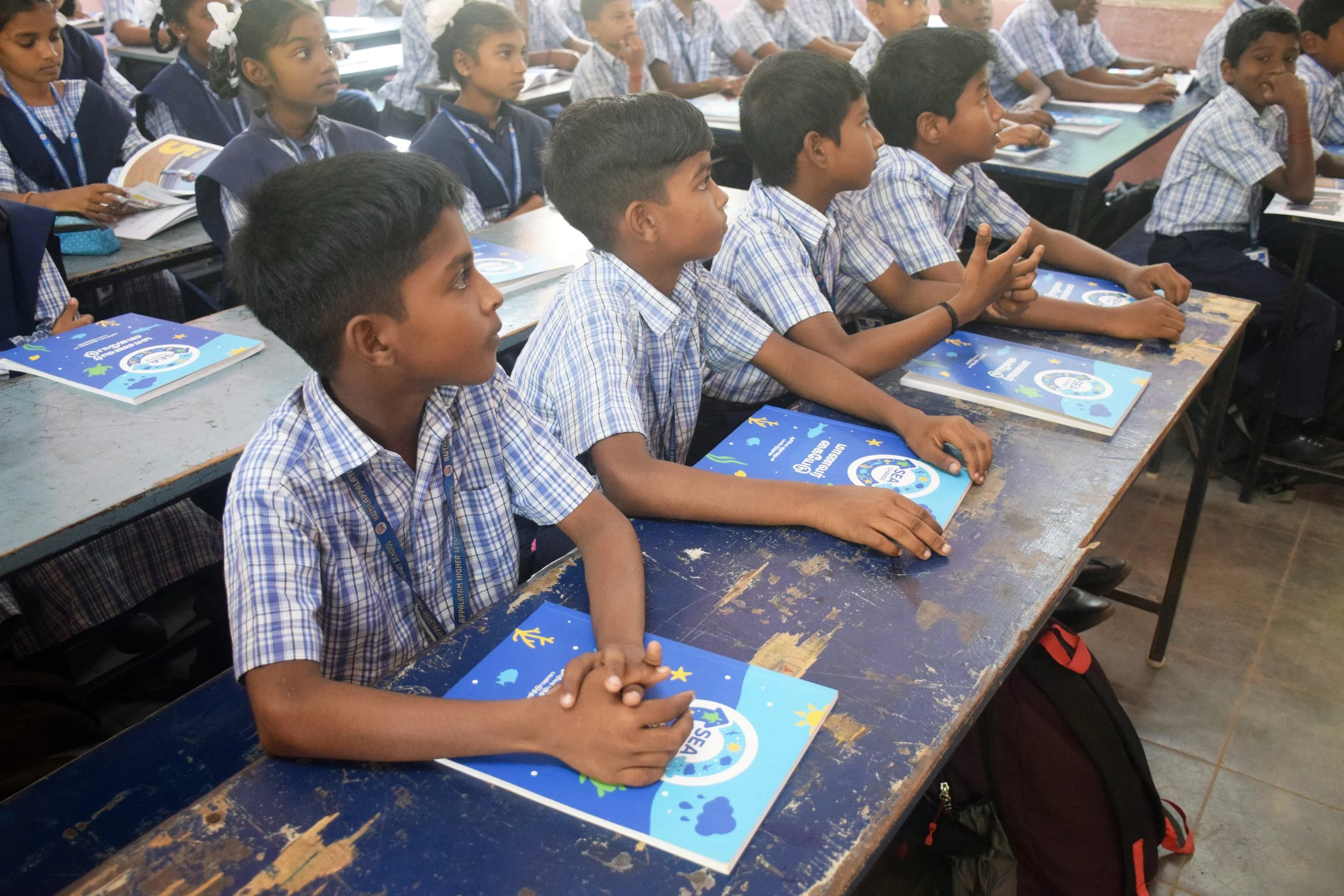
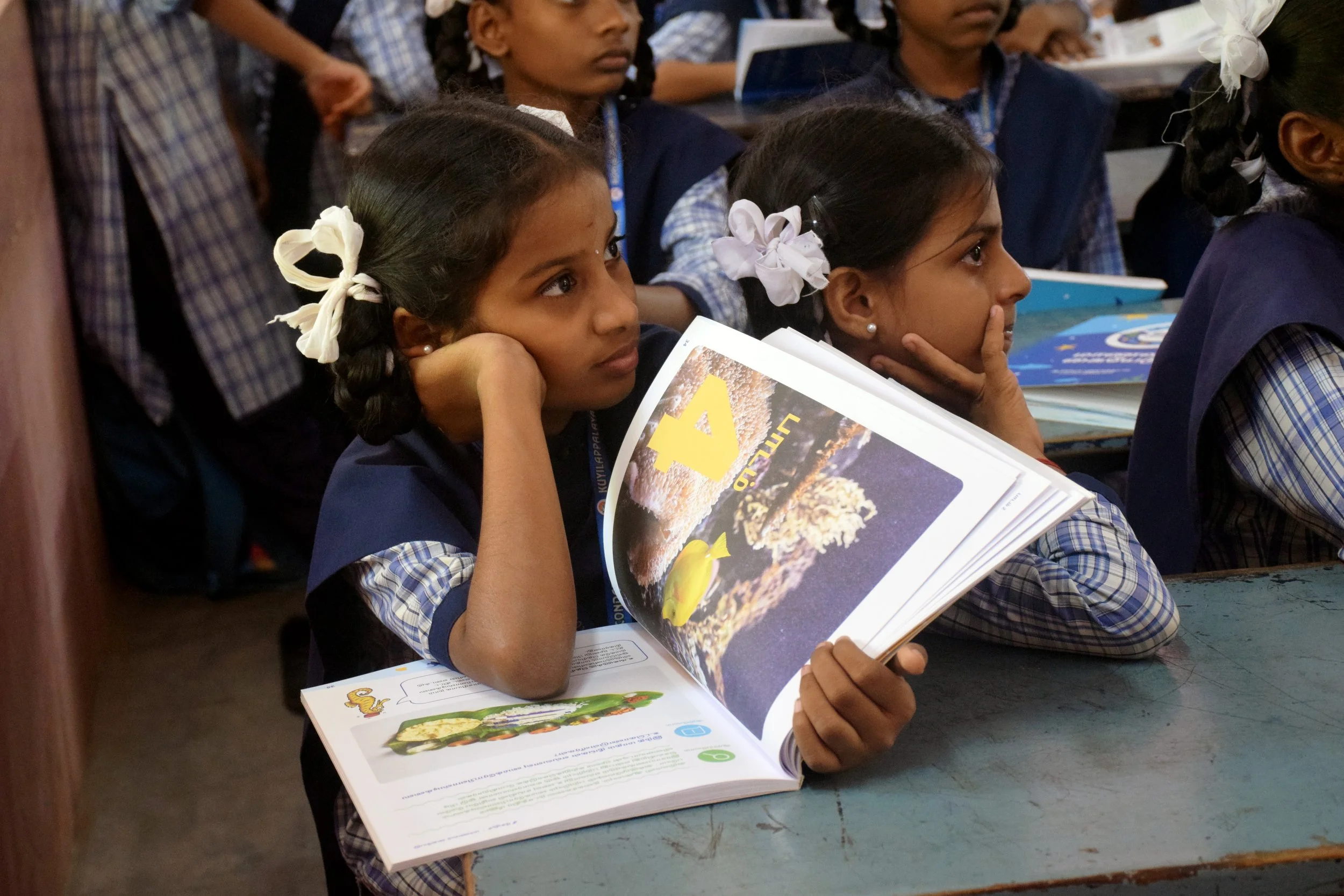
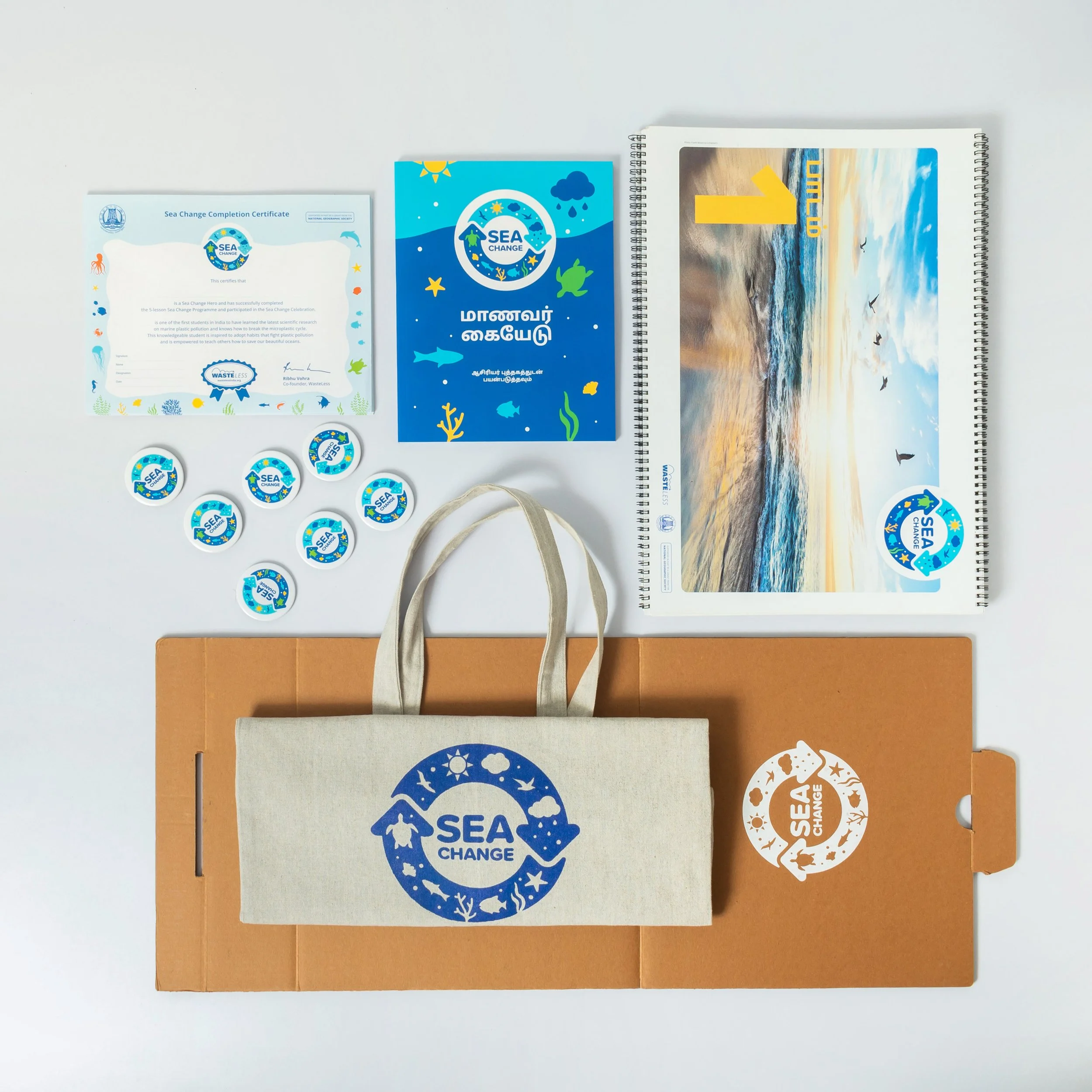
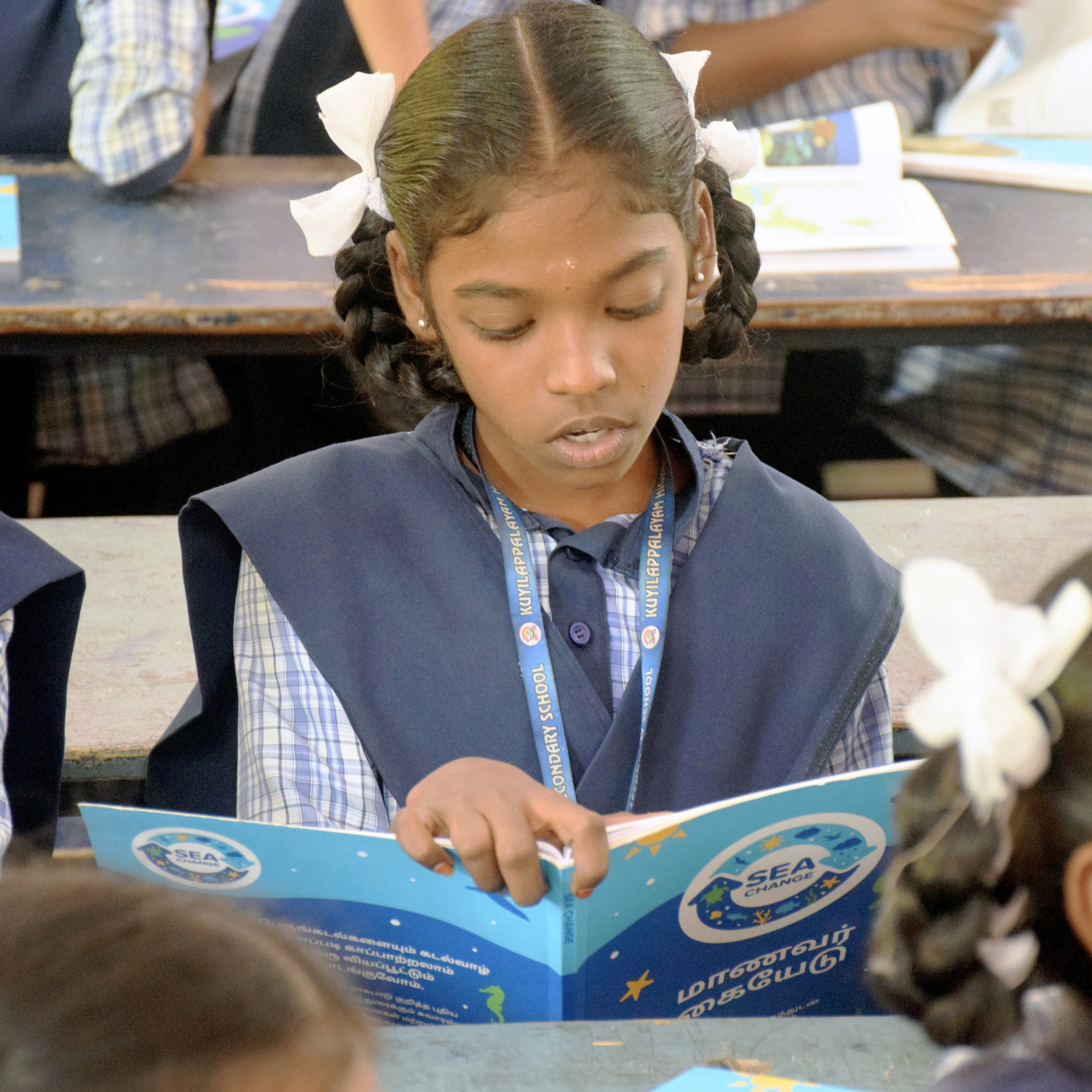
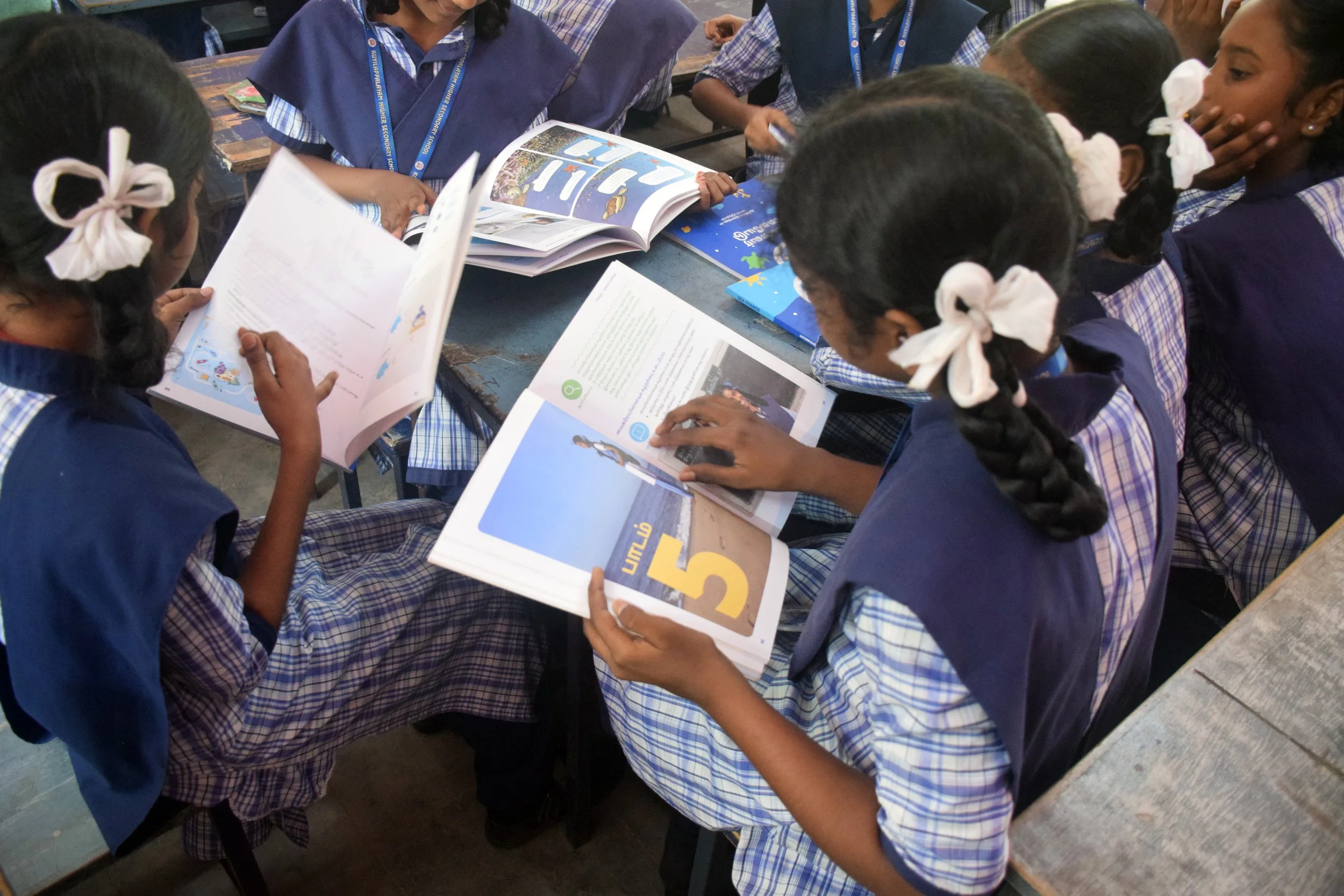
The Sea Change programme, an innovative 5-lesson toolkit developed by WasteLess, aims to reduce marine plastic pollution by educating children through hands-on experiments, games, and informative content. From January to March 2025, Aravindh and four of his colleagues implemented the programme across nine schools in Auroville and its bioregion, bringing with them textbooks, experiment kits, and art supplies for student projects.
What began as "just another job" for Aravindh transformed into a passion for environmental education. The programme's focus on how plastic pollution affects marine life - and ultimately humans - fascinated him. "I learned alongside the students during my preparation," he shares, highlighting how the experience deepened his own understanding of environmental issues.
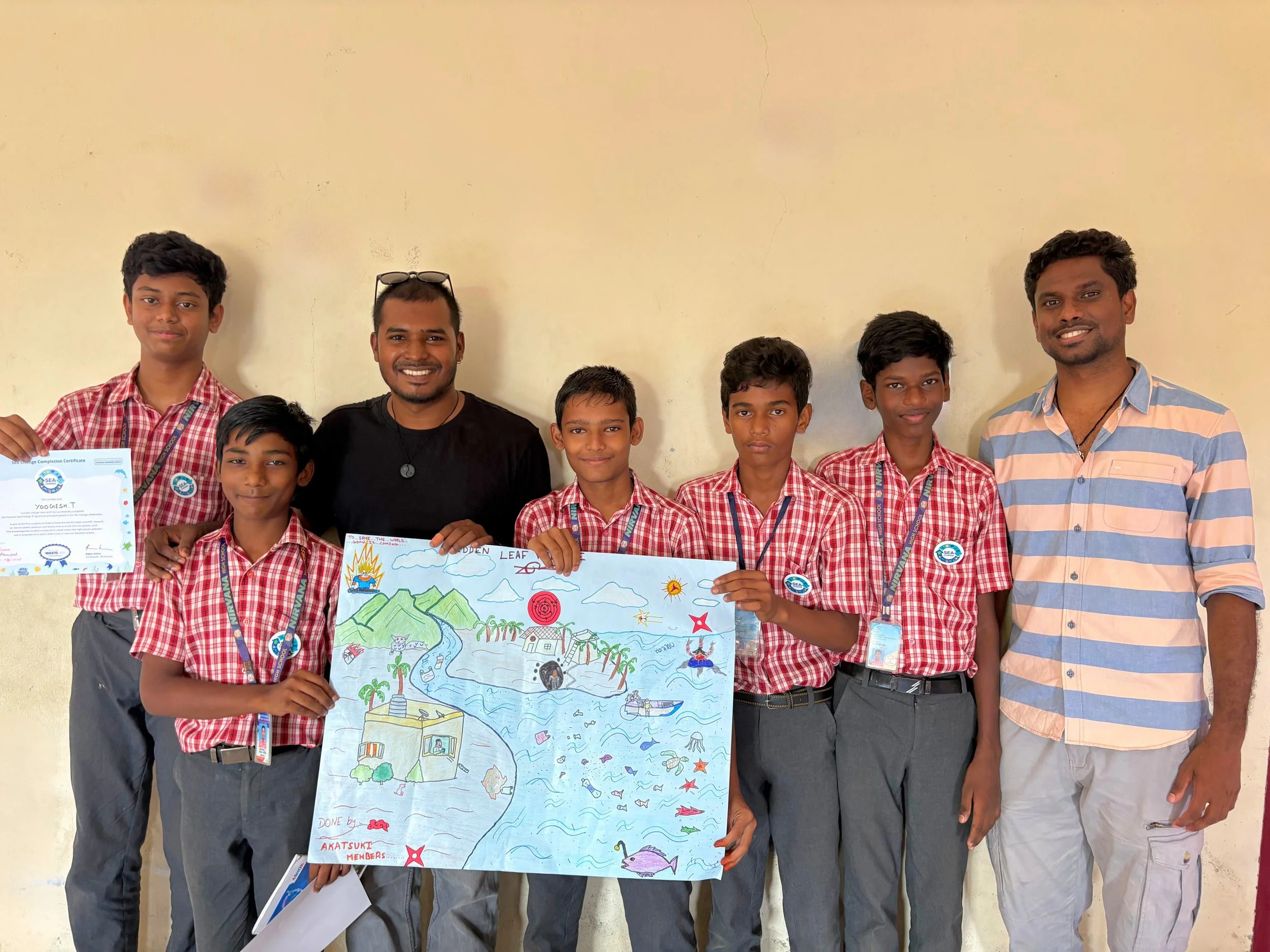
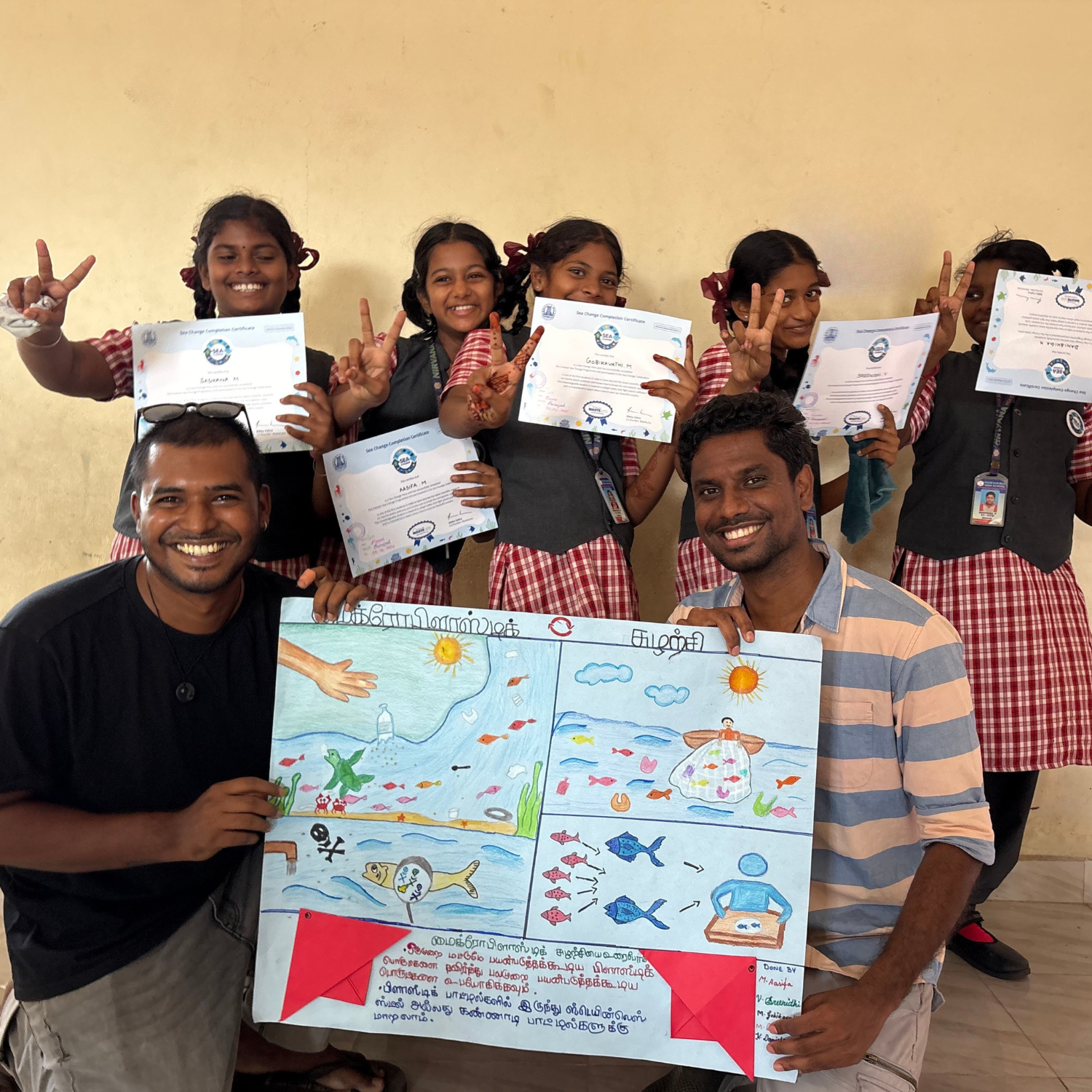
Dinegar and Aravindh (on the right) with students during a Sea Change Celebration.
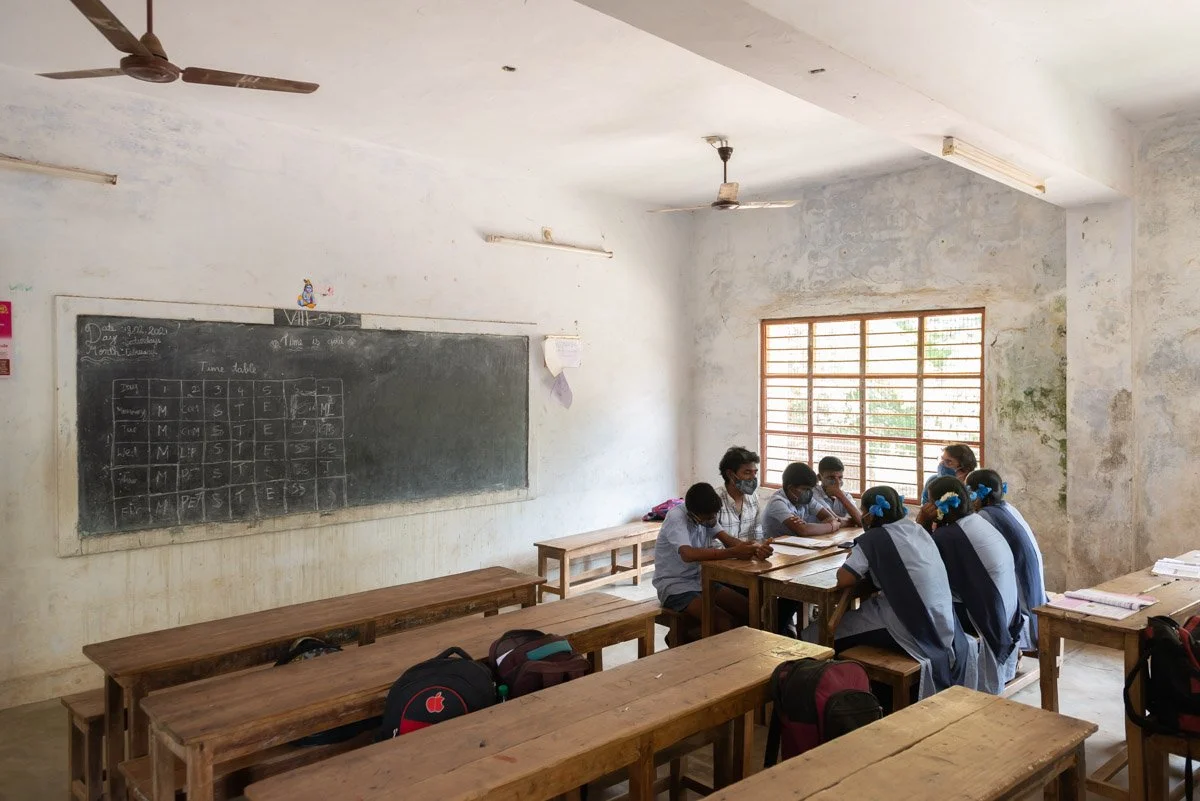
Classroom dynamics varied widely. Smaller groups engaged easily, while larger classes presented challenges in maintaining focus. In some schools, teachers remained as observers, while in others, they actively participated. What remained consistent, however, was students' curiosity - they frequently asked when the team would return for the next lesson.
One of the most memorable activities was a game where children had to identify what fish eat versus what is microplastic. The shock on their faces when they learned that fish often cannot tell the difference between microplastics and plankton (their natural food) created powerful learning moments. These realisations sparked conversations that extended beyond the classroom, with many students reporting they had discussed what they learned with parents and neighbours.
"We don't know what you will become - engineers, doctors - but even if one of you joins a government job in waste management and sustainability, what you learn in this programme will help you bring change to society," the team told the children. Rather than placing the burden of "saving the world" on young shoulders, they presented realistic perspectives: damage has been done by previous generations, but awareness and small changes can make significant impacts over time.
The programme culminated in Sea Change Celebrations where students shared their learning through group projects and presentations. For many, this was their first experience presenting to an audience. Despite knowing the material well, nervousness sometimes got the better of them -- providing additional learning in presentation skills beyond the environmental content.
The experience transformed Aravindh personally and professionally. His public speaking skills and confidence improved. "Interacting with children brings the child out in you," he reflects - rekindling excitement, curiosity, and playfulness in his own life. The programme even changed his personal habits; he stopped using plastic at home and began bringing his own containers to restaurants for take-away food.
Perhaps the most touching moment came at Nirvana School in Kottakuppam, where about 40 students asked for his autograph. They said they would miss him and requested he return with a new programme the following year -- a testament to the connections formed during their time together.
"The programme creates change that may not be immediate but will have an impact in the future," Aravindh believes. From accountant to environmental educator, his journey with Sea Change illustrates how education can transform not only students but adults as well - creating ripples of change that extend far beyond the classroom. The once hesitant accountant now proudly stands as an environmental educator, planting seeds for future change through the enthusiastic minds of children.
Beyond environmental awareness, Aravindh witnessed remarkable development in students' presentation skills, teamwork abilities, and overall confidence. His approach to teaching of stepping into the classroom as a friend and companion in learning created a safe space where children felt comfortable sharing and exploring ideas freely.
When other students from different grades were invited to these celebrations, unplanned benefits emerged: knowledge spread beyond the programme participants. The students became teachers themselves, answering questions from their peers and extending the programme's reach.
Students also reported bringing what they learned home, convincing their families to switch from plastic to steel cutlery or eliminate plastic bottles entirely. These small victories reinforced the programme's relevance and showed how children can become catalysts for change in their communities.