Our Oceans, Our Future:
Sea Change
The oceans of our planet tell a story of crisis and hope. Today, over 5 trillion pieces of plastic drift through our seas [1], with a staggering 8 million metric tons added annually [2]. This is not just a number, but a critical threat to 267 marine species, from majestic whales to vibrant seabirds, who struggle daily with entanglement and ingestion of our plastic waste [3].
This crisis has expanded beyond marine life all the way to us and our health. Recent studies reveal an unsettling truth: microplastics have infiltrated every aspect of our lives – the air we breathe, the food we eat, and even our organs and bloodstream [4]. These microscopic particles act as invisible carriers of harmful chemicals, bacteria and invasive species, creating rippling effects through our ecosystems that we are only beginning to understand.
The scale of plastic production compounds this problem. From a modest 2 million metric tons in 1950, global plastic production exploded to 8.3 billion metric tons by 2017 [5]. Without intervention, experts project this could reach an astronomical 34 billion metric tons by 2050 [6]. The harsh reality is that only 9% of all plastic ever produced has been downcycled [7], meaning we are often just delaying rather than preventing plastic's inevitable journey to our environment. While these traditional efforts have a value, they simply cannot keep pace with this tsunami of plastic waste.
Turning the Tide
on Microplastic
Our Mission:
Empowering Tomorrow’s Change-Makers
At the heart of our mission lies a powerful belief: protecting the future of our planet begins with educating children today - the future generations of tomorrow. By empowering them with knowledge and practical tools, while igniting their passion, we enable them to reshape their communities, becoming conscious protectors of our oceans and their own future.
The Sea Change Programme
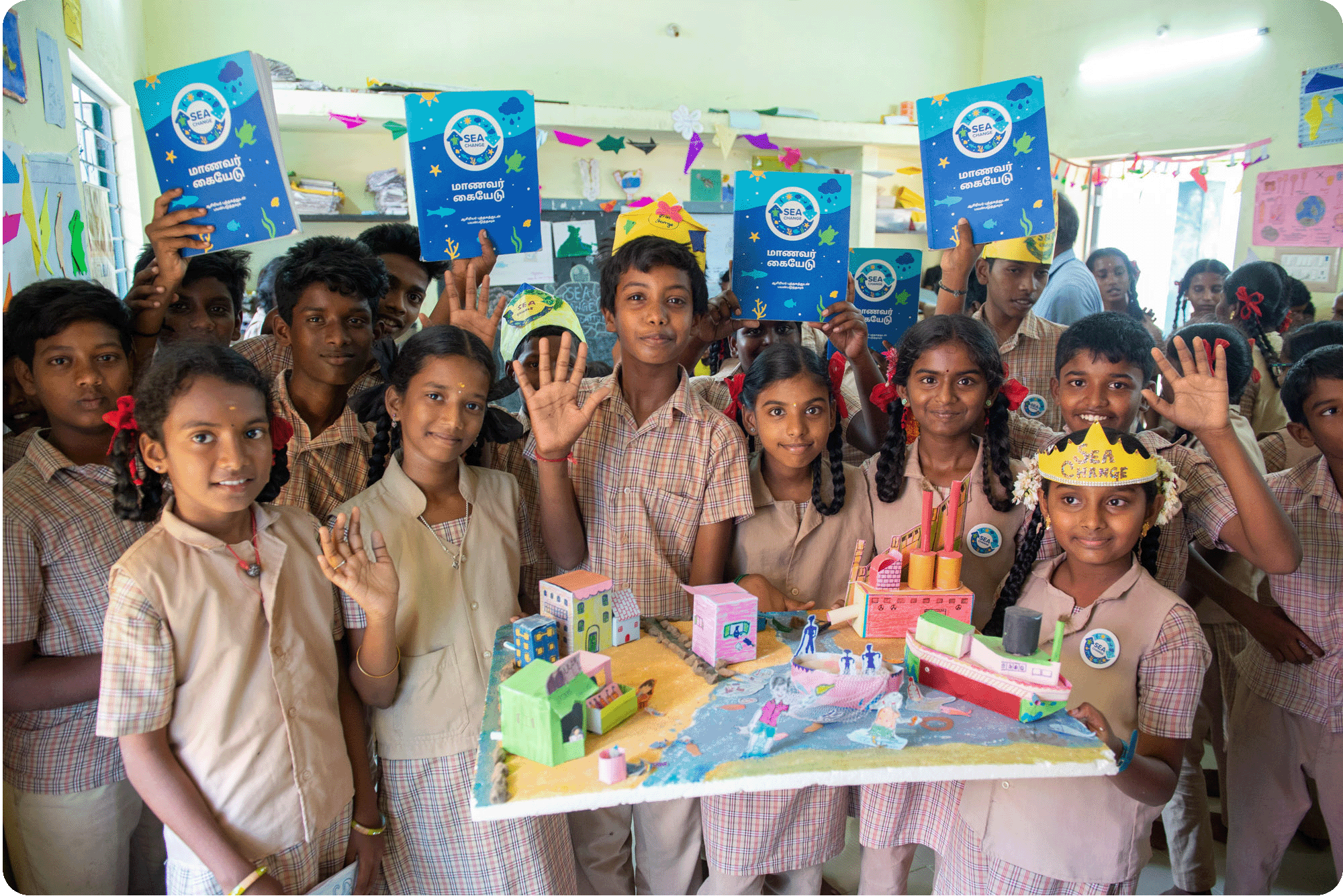
'Sea Change' is an innovative 5-lesson toolkit designed to reduce marine plastic pollution at its source by educating children through informative content, hands-on experiments, interactive games, and an engaging celebration. As the first curriculum to comprehensively address the microplastics cycle, the programme aims to inspire students to become proactive protectors of our oceans.
Grounded in Triandis' Theory of Interpersonal Behaviour, the programme seeks to meaningfully influence children's attitudes and behaviours toward plastic use. By providing in-depth education about microplastics' devastating impacts on marine ecosystems and cultivating an emotional connection with the ocean, 'Sea Change' strategically works to create positive associations with reducing plastic consumption while simultaneously fostering positive connections to ocean health.
Through this comprehensive approach, the toolkit aspires to fundamentally transform children's beliefs, attitudes, intentions and ultimately their behaviours regarding plastic use and disposal, empowering the next generation to become environmental stewards for our planet.
Programme Monitoring and Social Impact Evaluation
We developed an elaborate monitoring and evaluation framework for the ‘Sea Change’ programme, employing several research methodologies to understand the potential transformative impact of our environmental education among young students in Tamil Nadu.
Our robust randomised approach across 32 schools in the Villupuram district, engaging 1,939 students through comprehensive baseline and endline surveys. By comparing treatment and control groups, we designed a precise measurement approach targeting three critical outcome areas: knowledge enhancement about marine plastic pollution, attitude transformation, and potential behavioral changes in plastic management.
Using a mixed-method approach, our team collected data through 18 quantitative questions incorporating yes/no and Likert scale formats, supplemented by qualitative insights from focus groups and teacher interviews. Our statistical techniques, including the Difference-in-Differences (DiD) model, allowed us to isolate the Programme Monitoring and Social Impact Evaluation programme's specific impact and confidently attribute observed changes to our intervention.The research methodology incorporated two analytical approaches: an Intent-to-Treat (ITT) analysis providing a realistic real-world effectiveness estimate, and a Treatment on Treated (ToT) analysis offering targeted programme implementation assessment. This included randomly selected schools from 200 eligible institutions to ensure an unbiased sampling approach.
The qualitative data collection methods used were equally robust, drawing from focus group discussions, teacher interviews, photographic documentation, and programme celebration outputs. This multi-source verification ensured a comprehensive understanding of the programme's effectiveness.
Impact Results
Our collected impact results showed that the ‘Sea Change’ programme was an effective tool to create environmental awareness. Students who participated in Sea Change were 28 times more likely to correctly answer technical questions about microplastics. An impressive 93 percent of treatment group students could explain how microplastics enter our food chain, compared to just 62 percent in the control group.
We observed nuanced changes in student understanding. Before our intervention, over 80 percent of students believed simply cleaning up plastic would solve pollution problems. After the programme, 40 percent of treatment students recognised the complexity of plastic pollution, demonstrating a critical shift in systemic thinking.
Beyond knowledge acquisition, the programme showed tangible behavioral impacts. Students became more likely to use sustainable alternatives like cloth bags and reusable water bottles. Perhaps most significantly, they were empowered to share their learning, transforming into active change makers for marine conservation.
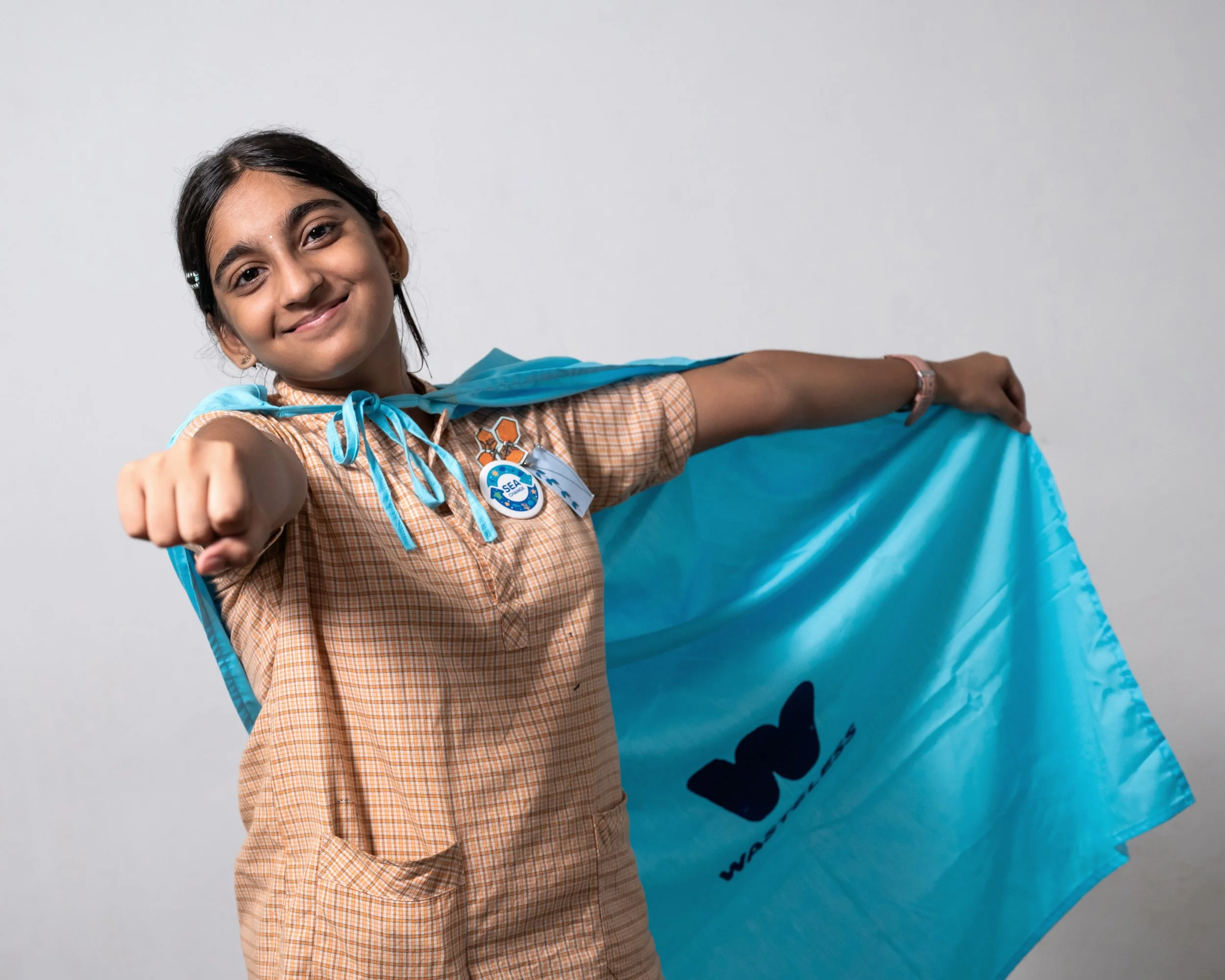
“I really think that introducing more schools to the sea change will actually help. Because if one school can actually make such a big difference then you have to imagine what schools all over the world can do”.
- Nikita 8th Grade, attended the ‘Sea Change’ programme